
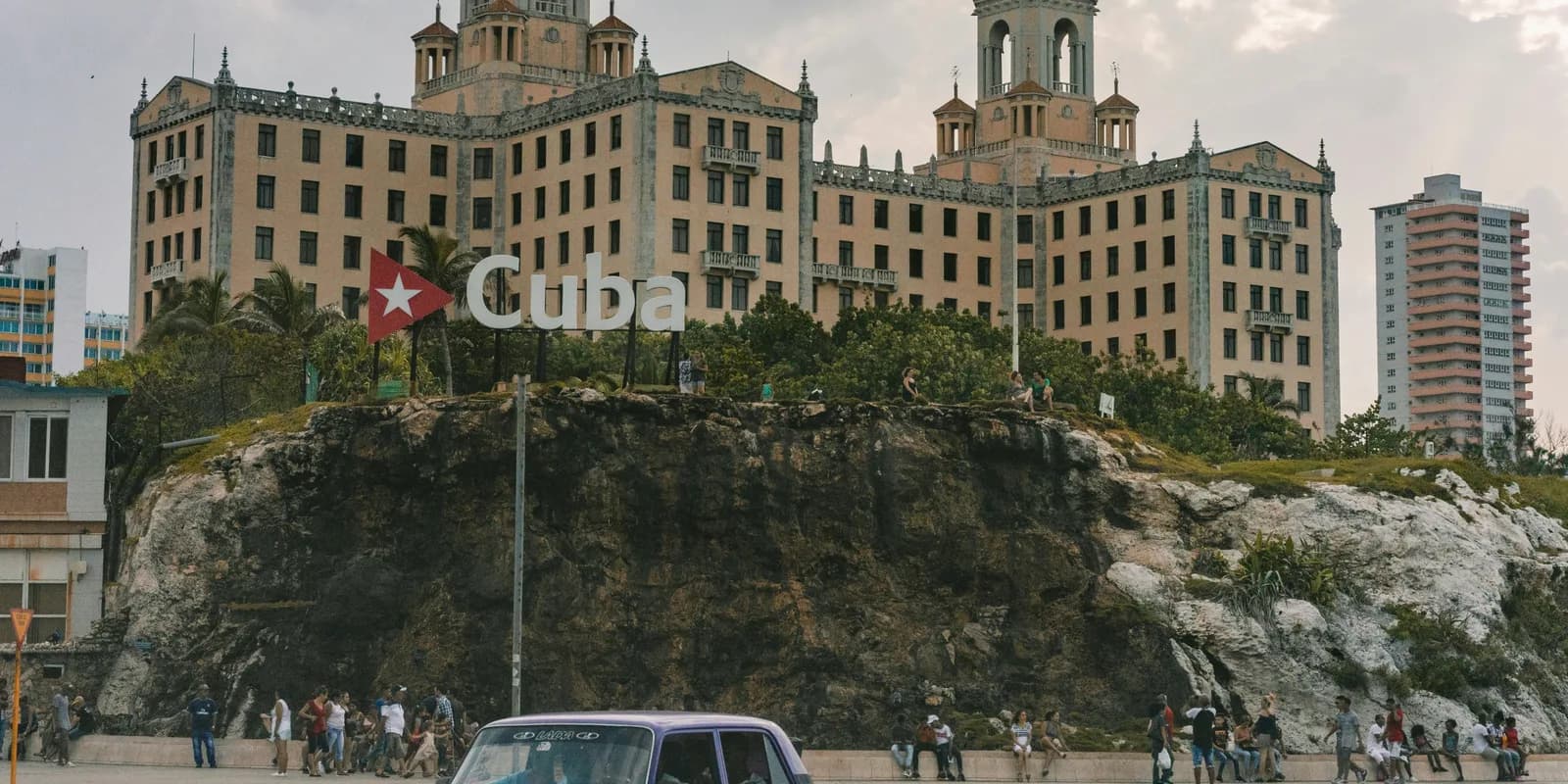
Cuba
Havana
Colonial plazas, sea air and music
- Recommended stay
- 3–4 days
- Best time to visit
- November to April
- Airports
- HAV
Havana at a glance
Havana layers colonial plazas, seafront walks, music and everyday neighbourhood life across a city best explored slowly.
Quick information
November to April is the dry season: lower humidity, reliable sunshine and cooler evenings. December to February are the most comfortable months for walking Habana Vieja. May to October is hurricane season — heavy rain is possible but storms rarely hit Havana directly. July and August are very humid. The annual Havana Jazz Festival takes place in January.
Plan your visit
Airport to centre
State taxi
A road journey to Vedado or Habana Vieja, depending on traffic
Fare agreed before the journeyTransportMust-see sights
One-day itinerary
- Morning: Walk the cobbled streets of Habana Vieja starting at Plaza de la Catedral and the Callejón del Chorro.
- Lunch: Ropa vieja and black beans at a paladar in the streets around Plaza Vieja in the heart of the old city.
- Afternoon: Browse the handicraft market at Plaza de la Catedral and walk to the Castillo de la Real Fuerza by the waterfront.
- Evening: Stroll the Malecón at sunset, the broad seafront boulevard where the whole city gathers in the warm evening air.
Best areas to stay
Habana Vieja
The UNESCO-listed historic centre is the most atmospheric area, with cobblestoned plazas, colonial architecture and proximity to the main sights. Most casas particulares and boutique hotels are concentrated here. Can be noisy and warm; a good base for first-time visitors.
Best for
First-time visitors, sightseeing, atmosphere
Centro Habana
The busy commercial district adjoining Habana Vieja. More affordable accommodation, lively street life and a real slice of daily Cuban life. Less polished than Habana Vieja but authentic and well-connected.
Best for
Budget stays, authentic local life
Vedado
The leafy residential and hotel district west of Centro Habana, home to large state hotels, Coppelia ice cream park, the University of Havana and El Vedado's café scene. Quieter than the old city, with a 1950s modernist character.
Best for
Longer stays, quieter setting, 1950s architecture
Miramar
A residential western suburb of wide boulevards, embassies and upscale casas particulares. Further from the main sights — you will need taxis — but good for longer stays or if you prefer a quieter, more residential setting.
Best for
Upscale stays, embassies, residential setting
Playa / Jaimanitas
A coastal area west of Miramar, known for the Fusterlandia mosaic art project and beach access. Very local feel; suits independent travellers who want a break from the tourist circuit.
Best for
Independent travellers, Fusterlandia art, beach access
Old Havana waterfront / Malecón
Staying near the Malecón puts you between Habana Vieja and Vedado, with the sea wall promenade on your doorstep. Atmospheric in the evenings when locals gather; expect traffic noise from Avenida de Maceo.
Best for
Evening atmosphere, Malecón promenade, central location
Approximate budget
Budget
USD 25–45
per day, per person
Casa particular (private homestay) accommodation, local paladares, street food and shared almendron taxis. Requires paying mostly in CUP and being comfortable navigating without English.
Mid-range
USD 60–120
per day, per person
Private casa particular or small hotel, CUBATAXI taxis, private paladares and museum entries. Most tourists visiting independently fall in this range.
Comfort
USD 150–250
per day, per person
Boutique hotels in Habana Vieja, private taxis, upscale paladares and guided excursions. Note that luxury hotel supply in Havana remains limited and standards vary considerably.
Found this guide helpful? Buy us a coffee and help us keep our travel information independent and up to date.
☕ Buy us a coffee